

Signature Land
Hidden Kingdoms
Sikkim & Bhutan · Heritage & Discovery
Overview
Trip Snapshot
- Duration
- 12 days
- Group size
- Maximum 25 guests
- Departs
- Mar–May · Sep–Nov
- Deposit
- 25% of total
This is a journey for travellers who have already seen the world’s obvious grand tours and are now seeking something rarer: genuine access to two Himalayan cultures that remain, even today, remarkably unspoiled by mass tourism. Combining Sikkim’s monastic heritage and extraordinary biodiversity with the timeless serenity of the Kingdom of Bhutan, this privately guided, twelve-day journey moves entirely by private, chauffeur-driven vehicle and stays exclusively at handpicked boutique and heritage properties. Altitude becomes part of the story itself — from the subtropical plains of Siliguri to the high alpine terrain surrounding the sacred Tsomgo Lake, and finally to the rarefied air surrounding Bhutan’s Tiger’s Nest, poised dramatically above the Paro valley.
The Route
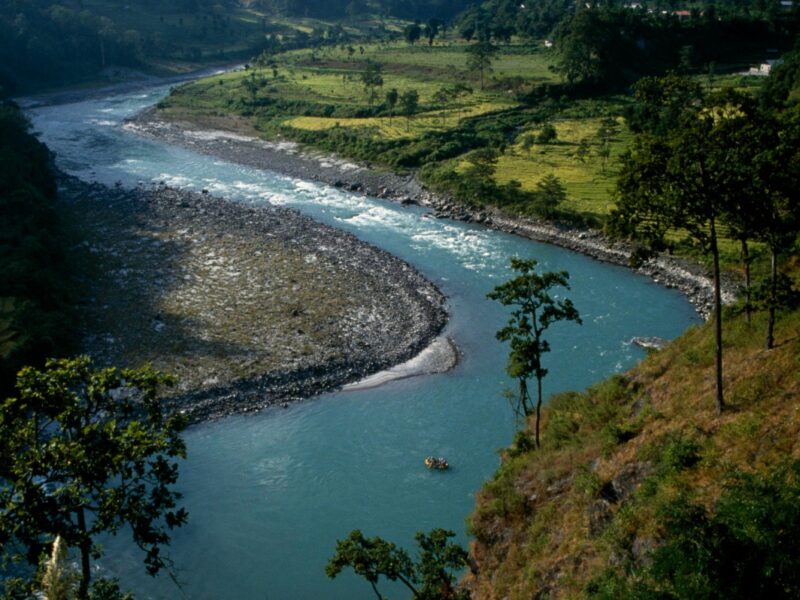
~125 km (4.5–5 hours) 120 m – 1650 m
Your journey into the Himalayas begins amid comfort: the group assembles at Hotel Marriott, Siliguri, with departure promptly at 11:00 AM in a private, chauffeur-driven vehicle. Leaving the sweltering plains behind — Siliguri sits at a modest 120 metres above sea level — the road follows the roaring, boulder-strewn Teesta River as it climbs steadily into the Himalayan foothills, covering roughly 120 kilometres and rising some 1,530 metres to reach Gangtok at 1,650 metres by late afternoon. The transformation along the way is dramatic: the humid sal and sissoo forests of the plains give way to subtropical broadleaf woodland thick with wild banana, screwpine, and tree ferns, with wild orchids clinging to moss-covered branches and troops of langurs occasionally glimpsed crossing the road. Arrival in Gangtok brings its own reward — check-in to a boutique property with sweeping views of the Kanchenjunga range, followed by a warm welcome dinner showcasing refined, authentic Sikkimese cuisine.
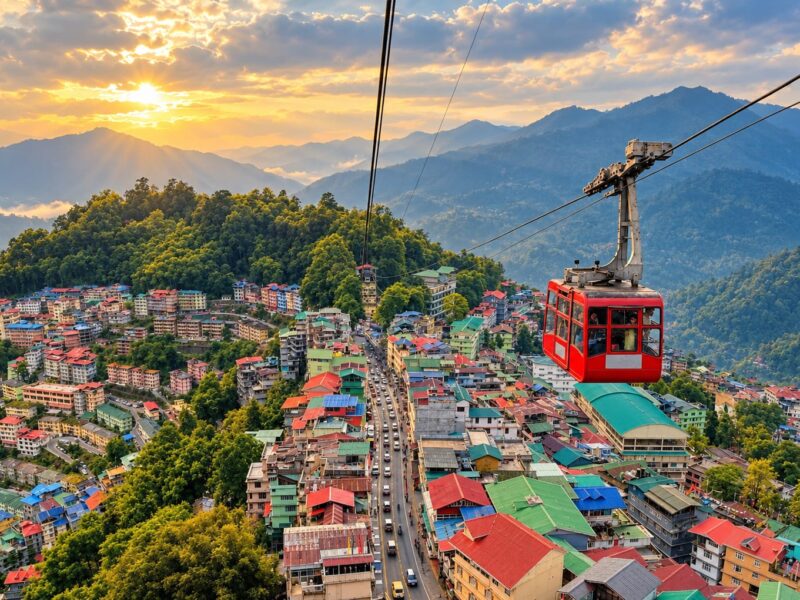
~30 km Local Circuit ~1,650 m – 1,800 m
With Gangtok's altitude of 1,650 metres calling for a gentler pace, the day is dedicated to acclimatisation and cultural immersion, with only a short 30 kilometres of local transfers. Sikkim's temperate broadleaf forests of oak, chestnut, and magnolia frame the drive to Rumtek Monastery, seat of the Karmapa and one of the most significant centres of the Kagyu lineage in the world, its grounds alive with the calls of fire-tailed sunbirds and Himalayan bulbuls. A visit to the Namgyal Institute of Tibetology and Enchey Monastery follows, offering a deeper look into the region's Buddhist scholarship and architecture — this is also orchid country, with Sikkim home to over 500 native species, many growing wild in these very hillsides. The afternoon turns to craft, with a visit to a traditional handicrafts centre to observe fine handwoven textiles and intricate thangka painting, before the day closes with a relaxed stroll along the pedestrianised MG Marg as the evening lights come on.

~80 km (3.0 – 4.0 hours) Ascent from 1,650 – to 3,780 m
Today brings one of the true highlights of the journey: a dramatic day excursion to the sacred Tsomgo Lake, also known as Changu Lake, near the historic trade route to the Indo-China border. The drive covers roughly 80 kilometres round trip, climbing from Gangtok's 1,650 metres to the lake's rarefied 3,753 metres — a gain of well over 2,100 metres — before returning to Gangtok by evening, so the net elevation of your stay remains unchanged even as the day itself reaches genuinely high-altitude terrain. Fed by snowmelt from the surrounding peaks, this glacial lake is held sacred by the Sikkimese, who traditionally believed that Buddhist lamas could divine the future from the changing colours of its still waters, a hue said to shift with the seasons from deep blue to jade green. The landscape here is stark and alpine, framed by dwarf rhododendron and cushions of primula in the warmer months, and transformed in winter into a frozen, snow-blanketed amphitheatre. Yaks graze placidly along the lake's edges, occasionally offered for a short photo ride, while sharp-eyed travellers may spot a Himalayan marmot darting between rocks or, in season, migratory Brahminy ducks resting on the water. Given the altitude, the pace here is deliberately unhurried, allowing time to properly absorb one of the most striking high-altitude landscapes in the Eastern Himalayas before returning to Gangtok for an evening at leisure.
Note: This excursion falls within a protected border area and requires an Inner Line Permit, which Roam Beyond arranges in full on your behalf.

~35 km (1.0 – 1.5 hours) 1,650 – 1,400 m
Leaving the capital behind, today's 35-kilometre drive takes you gently downhill, descending some 250 metres from Gangtok's 1,650 metres to the tranquil, emerald-green Martam Valley at 1,400 metres. The landscape softens into a patchwork of terraced rice paddies and large cardamom plantations — Sikkim being the world's leading producer of this prized spice — interspersed with wild orchids and fluttering clouds of butterflies drawn to the valley's rich biodiversity. Known for its traditional villages and unhurried rural rhythm, Martam offers a genuine glimpse into everyday Sikkimese life, away from any tourist circuit. The afternoon is spent at leisure, taking unhurried walks along village trails, meeting local farming families, and simply absorbing the serenity of the countryside
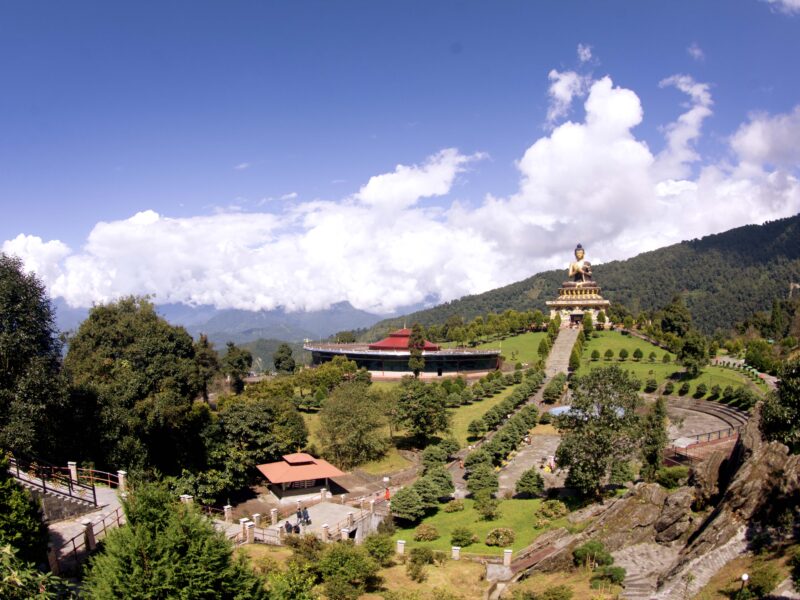
~75 km (3.0 – 3.5 hours) 1,400 m – 2,150 m
The journey turns westward today, covering approximately 75 kilometres and climbing back up some 750 metres, from Martam Valley's 1,400 metres to Pemayangtse's 2,150 metres. The route passes through lush, layered mountain landscapes and manicured tea gardens, the forest gradually shifting to mixed conifer and rhododendron as the elevation rises. Pelling, the historic region you arrive in by afternoon, is home to some of Sikkim's most revered monastic sites and offers arguably the most dramatic, close-up vistas of the Kanchenjunga massif anywhere in the state. Settle into your hotel and spend the remainder of the day simply absorbing the view, as the third-highest mountain on Earth dominates the skyline in the fading light
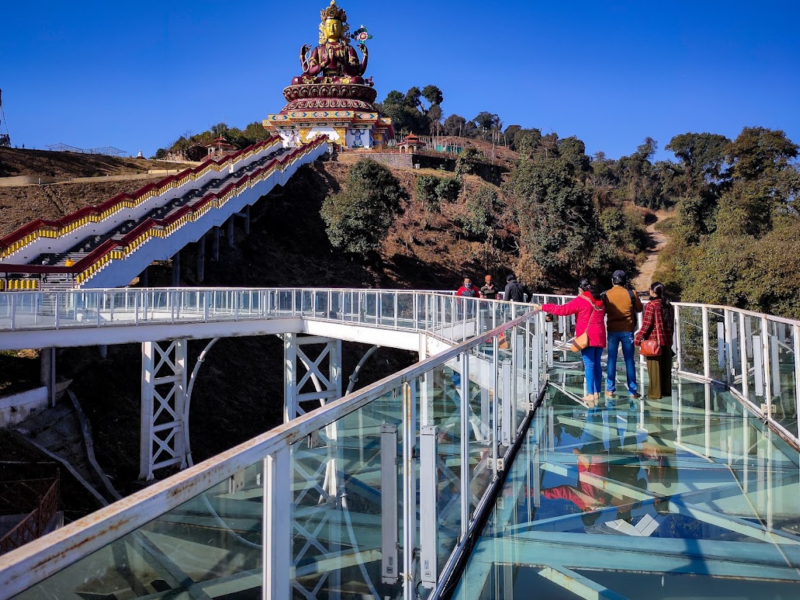
~35 km Local Circuit 2,150m – 2,400 m
A full day is devoted to the royal and spiritual heritage of West Sikkim, with a modest 35 kilometres of local transfers and no significant change in altitude from Pelling's 2,150 metres. The centrepiece is Pemayangtse Monastery, founded in 1705 and among the oldest and most important Nyingma monasteries in the state — historically reserved for ta-tshang, monks of pure Tibetan lineage, and long considered the spiritual head of Sikkim's monasteries. Inside stands an extraordinary hand-carved wooden sculpture depicting Guru Rinpoche's celestial abode, Zangdok Palri, crafted painstakingly over years by a single monk. From there, a walk through quiet forest trails — where the fortunate may spot the elusive red panda or hear the distinctive call of the Himalayan monal pheasant, both native to this biodiversity-rich corner of the Kanchenjunga landscape — leads to the atmospheric Rabdentse Ruins, once the second capital of the former Kingdom of Sikkim before it merged with India in 1975. The day concludes at the sacred Khecheopalri Lake, revered by Buddhists and Hindus alike as a 'wish-fulfilling' lake, where local legend holds that birds pluck away any leaf that dares fall upon its pristine surface

~110 km ( 4.0 -4.5 hours ) 2,150m – 1,250 m
Today's 110-kilometre drive marks a return to lower elevations, descending some 900 metres from Pemayangtse's 2,150 metres to Kalimpong's 1,250 metres, as the road winds south through scenic borderlands from Sikkim into the West Bengal hills. Once a vital trading post along the historic Silk Road between India and Tibet, Kalimpong today is known for its Raj-era charm and, notably, its flourishing private nurseries — the town's cool climate has made it one of India's great centres for orchid, cactus, and amaryllis cultivation. After checking into a restored heritage hotel, spend the afternoon exploring Durpin Monastery, perched on a ridge with sweeping valley views, or browsing the town's characterful artisan markets.

~170 km (5.0 – 6.0 hours) 1,250m – 293 m
The road continues its descent today, covering roughly 170 kilometres and dropping some 957 metres from Kalimpong's 1,250 metres down to the subtropical plains of Phuentsholing at just 293 metres, on the international border with Bhutan. The drive passes through tea gardens and the dense sal forests of the Dooars foothill belt, a landscape known for its rich wildlife corridors, before arriving at Jaigaon, the bustling Indian border town. Entry permit and immigration formalities into Bhutan are completed here at an unhurried pace on your behalf, after which you check into your hotel for the evening — a fitting first taste of Bhutanese architecture and calm before venturing deeper into the kingdom the following day.

~170 km (5.5 – 6.5 hours) 293 m – 2,320 m
An early departure sees you climbing steadily out of the subtropical plains, gaining over 2,000 metres across approximately 170 kilometres as the road rises from Phuentsholing's 293 metres to Thimphu's 2,320 metres. The ascent moves through several distinct ecological zones — from broadleaf and sal forest at the base, through temperate oak and rhododendron belts, into the blue pine and Himalayan cypress forests that define Bhutan's higher valleys, the cypress being the country's national tree. This is also prime territory for spotting the rare golden langur, a strikingly pale, golden-furred primate found almost nowhere else on Earth outside this stretch of Bhutan and neighbouring Assam. Arriving in Thimphu by early afternoon, check in and enjoy lunch before a half-day city tour: the imposing Tashichho Dzong, originally built in 1216 and rebuilt in its present form in 1641 by the Zhabdrung Ngawang Namgyal, the unifier of Bhutan — today it remains the seat of the Bhutanese government and monastic body. The tour continues to the towering Buddha Dordenma statue watching over the valley, and an evening walk around the National Memorial Chorten, where locals circumambulate at dusk beneath circling ravens — a bird considered sacred in Bhutan as the emblem of the guardian deity Gonpo Jarodonchen, and featured on the royal crown itself.
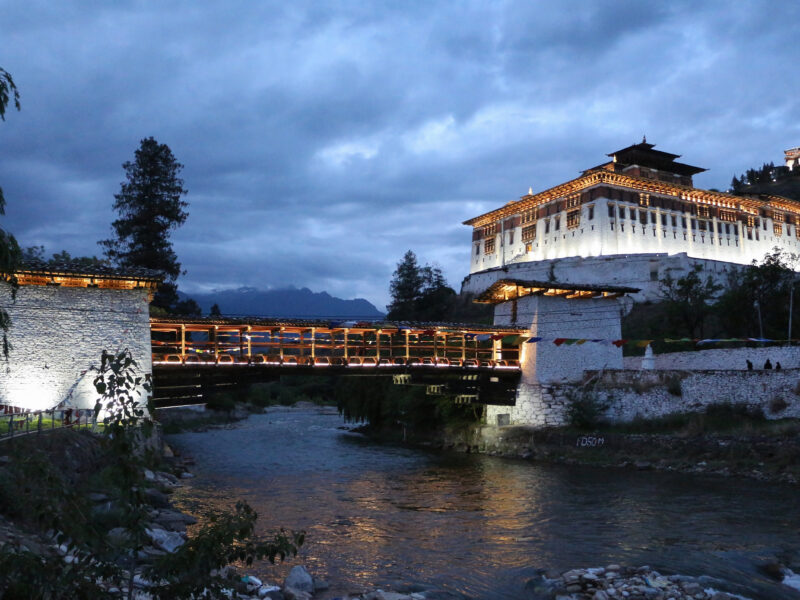
~55 km (1.5 – 2.0 hours ) 2,320 m – 2,200 m
A short and scenic 55-kilometre drive along the river valley brings you to Paro, descending gently by around 120 metres from Thimphu's 2,320 metres to Paro's 2,200 metres. Along the way and around Paro itself, the valley opens into terraces of red rice and apple orchards framed by pine-covered slopes — keep an eye out for the vivid blue-throated barbet or a Himalayan griffon vulture riding the thermals overhead. On arrival, visit the historic Rinpung Dzong — built in 1646 by the Zhabdrung Ngawang Namgyal, its name meaning 'fortress of the heap of jewels', and still the administrative and monastic seat of the district today — along with the National Museum of Bhutan, evocatively housed inside a centuries-old circular watchtower that once guarded the dzong itself. The afternoon brings a private demonstration of traditional archery, Bhutan's national sport and a source of considerable local pride and pageantry. The evening is yours to explore Paro's charming, low-rise town centre at leisure.
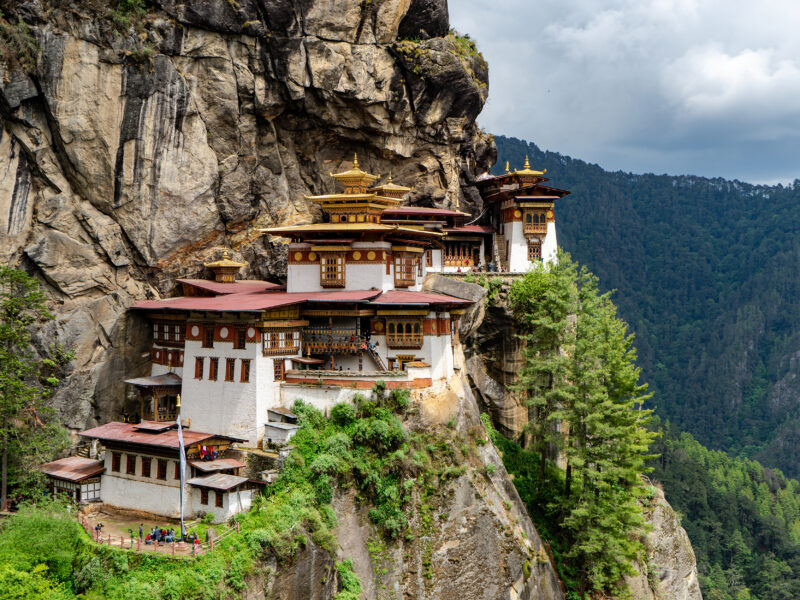
~165 km (5 hours by cab & 5 hours hike) 2,320 m – 293 m
This is the day many guests remember above all others: the hike to Paro Taktsang, the legendary Tiger's Nest Monastery. According to legend, Guru Rinpoche flew to this very cliff on the back of a tigress and meditated in a cave here for three months to subdue a local demon, and the monastery that now clings improbably to the rock face — some 900 metres above the valley floor — has drawn pilgrims for over three centuries. The hike climbs from Paro's 2,200 metres to the monastery's viewpoint at roughly 3,120 metres, a gain of some 920 metres achieved gradually through fragrant blue pine and rhododendron forest, with the option of a pony ride for the first stretch for those who prefer it. A cliffside teahouse roughly halfway up offers a natural pause and arguably the finest photograph of the entire journey, the monastery framed dramatically against sheer rock and open sky. Watch for Himalayan griffon vultures and lammergeiers riding the cliff-face thermals, and listen for the rustle of grey langurs moving through the canopy below. After descending for a well-earned lunch, the day continues with a scenic 165-kilometre drive back down to Phuentsholing, dropping to 293 metres for your final night within the kingdom, the day's net descent from Paro totalling close to 1,900 metres by the time you reach the plains.
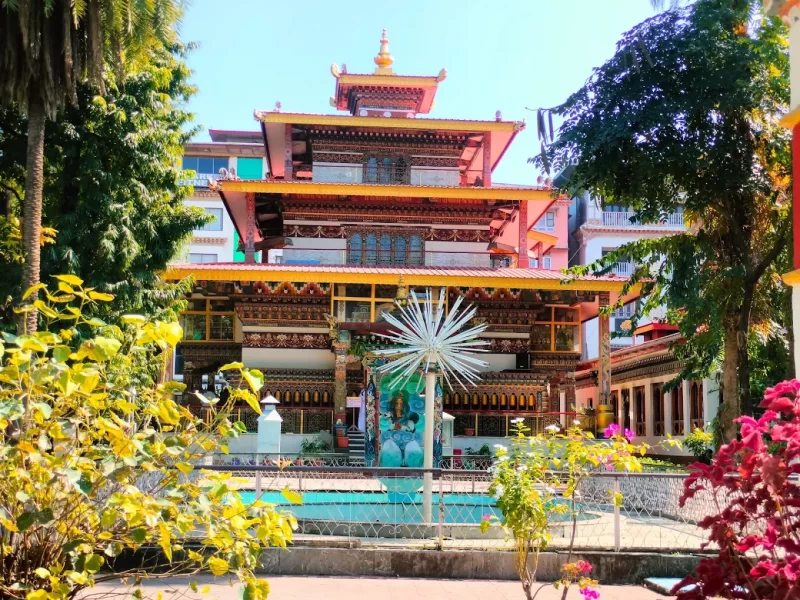
~170 km (4.5 – 5.5 hours) 293 m – 120 m
The final day is one of quiet transition rather than exploration: after completing exit formalities at the border, the group crosses back into India and drives approximately 170 kilometres, descending a further 173 metres from Phuentsholing's 293 metres to Siliguri's 120 metres. Here, amid the familiar warmth of the Indian plains, the tour formally concludes, with guests free to make their own onward travel arrangements — carrying home a journey through two of the most culturally rich and least commodified corners of the Himalayas.
Dates & Prices
Prices are per person, based on double occupancy
Multiple departures each spring and autumn. Land cost is confirmed when you reserve. A deposit holds your space.
What's Included
- All transportation in the best available jeeps or minibuses (other than airfare)
- Accommodation on twin-sharing basis (singles optional, subject to availability)
- All meals while touring
- Guide, crew, and drivers as per itinerary
- Local permits and entrance fees as per itinerary
Not Included
- Airfares and insurance of any kind
- Medical immunizations
- Emergency medical costs beyond first aid from the trip leader
- Laundry, alcohol, gratuities, donations
- Costs from delay or extension due to weather, politics, illness, or transport failure
Guidance on this trip
You travel with Himalayan hosts — not a revolving cast of contractors. Pema and the field team brief every departure, stay reachable, and introduce you to people they actually know.